


Build trust by making AI learning transparent and easy to understand.
Encourage users to contribute structured, high-quality business knowledge.
Create a continuous feedback loop that improves AI recommendations.
Reduce repetitive manual work by capturing organizational knowledge.
Establish the foundation for intelligent automation and predictive workflows.
A guided training center for onboarding and knowledge creation.
AI training using data from customer estimates, jobs, customer invoices, and supplier invoices.
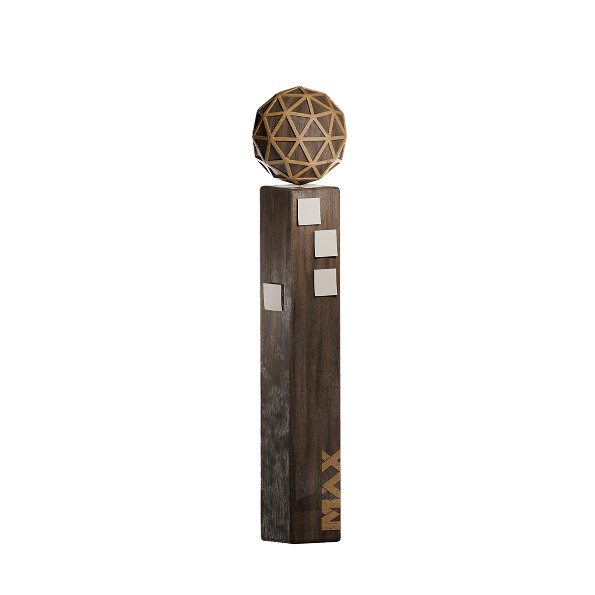
A gamified progression system with achievement levels (Helper → Apprentice → Journeyman → Master).
Contextual insights, learning recommendations, and automation opportunities.
Explainable rule creation, allowing users to understand how AI reaches decisions.
AI-generated draft templates to accelerate setup and reduce manual effort.

Most B2B products are designed to support complex workflows, so the design language is usually direct, information-dense, and functional. Visuals and gamification are often associated with B2C products, where they're used to improve onboarding, build habits, and keep users engaged.
What made designing the MAX Training Center interesting for me was bringing those engagement principles into a B2B environment. The challenge wasn't to gamify for the sake of it, but to help businesses understand the value of building their AI knowledge base. As users trained the system, they could see how their data was turning into a business asset capturing years of operational knowledge, identifying patterns, and helping the AI make better recommendations. The Training Center became more than an onboarding experience; it acted as a companion throughout the product, guiding users, rewarding progress, and helping them understand how different pieces of knowledge connect to create a smarter system.
The primary fundamental of the feature is to generate data and patterns for customer & supplier invoices, estimates and job details. The rewards system is designed according to the product requirement.

Gamification & Progression System
The progression system represents learning maturity, not feature usage or vanity metrics. Each level reflects the confidence and breadth of learned business logic, and directly governs what the AI is allowed to suggest or automate. Progression is cumulative, transparent, and irreversible.
/Levels, XPs and Capabilities
Helper
0 (Default)
Observation only; no AI output

Apprentice
5,000
Insights and contextual nudges

Journeyman
25,000
Insights, advanced suggestions, contextual nudges

Master
75,000
Insights, advanced suggestions, contextual nudges, automated drafts
/Rewards and Nudges
These Rewards are on the basis of activities, levels and XPs.

/What value does the center create for User
Level Progression Reward: Insights & Contextual Nudges

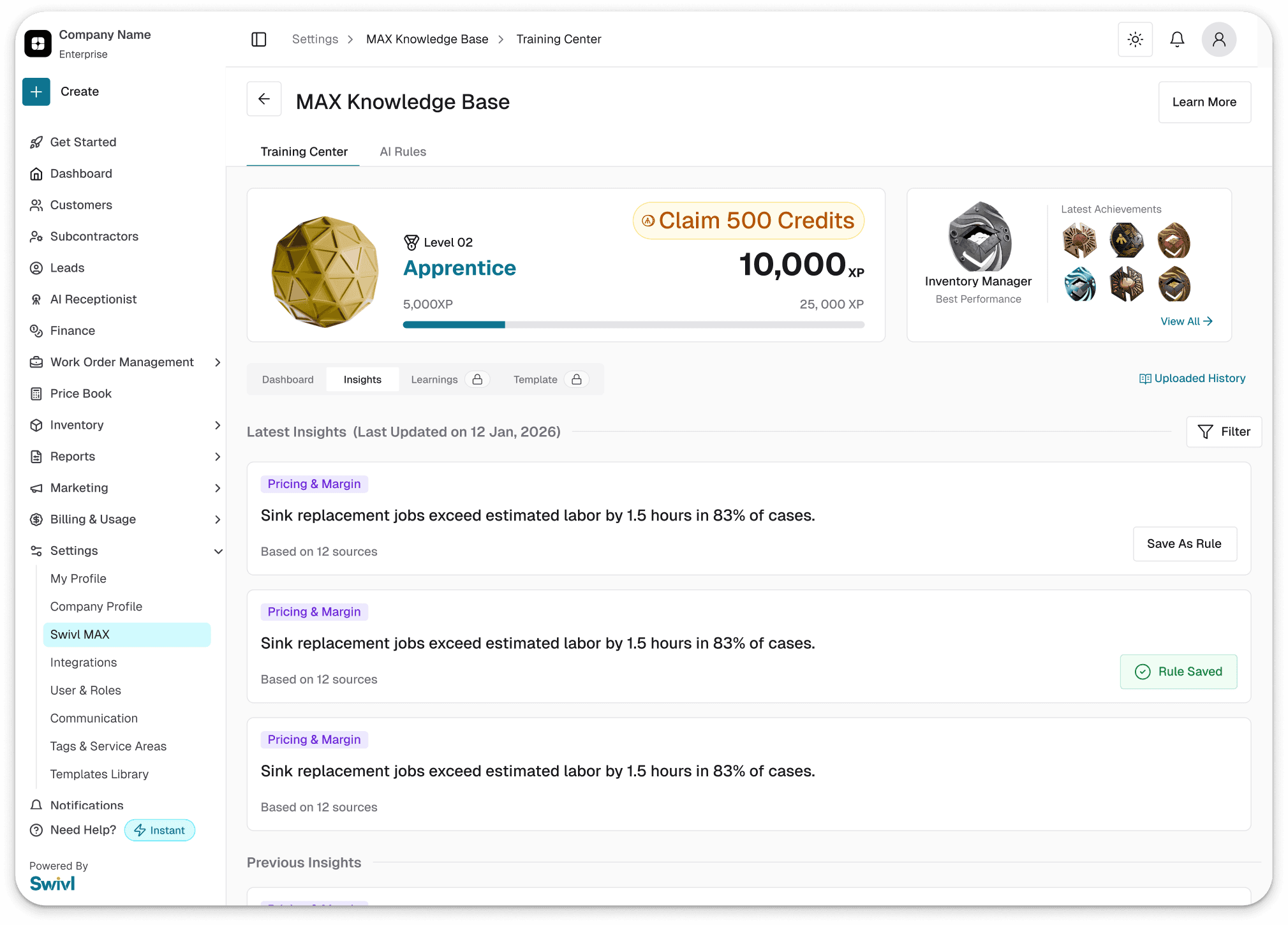
Insights - Proven patterns observed in ≥80% of relevant cases within the same category. The Insights can be from 5 to 50 in number for every sync. The broader classification of Rules and Non-Rules.
Guardrails (Rules)
Actionable and enforceable by the system
Binary or threshold-driven
Preventive or corrective
Clearly defined logic (if-this-then-that)
Insights (Advisory)
Non-enforceable
Contextual and exploratory
Helpful for decision-making
May include trends, suggestions, or observations
Conclusion
This was the first end to end feature that I worked on; the Training Center, Taking the experience from the problem definition and feature structure to the user flows, gamification, and interaction design. My biggest challenge was figuring out how to make something as abstract as “training an AI” feel tangible and worth doing for a busy field-service business owner. The product couldn't feel like a B2C game layered onto a B2B tool. The progression, rewards, and nudges had to have a real connection to how much the system had learned and what it could do for the business. I spent a lot of time translating invisible AI learning into something users could see, understand, and trust. In the end it wasn't able to scale due to the product growth where we integrated one AI channel that would throughout fix everything.
